Roaming Photobooth NYC: How It Works at a 200-Guest Wedding
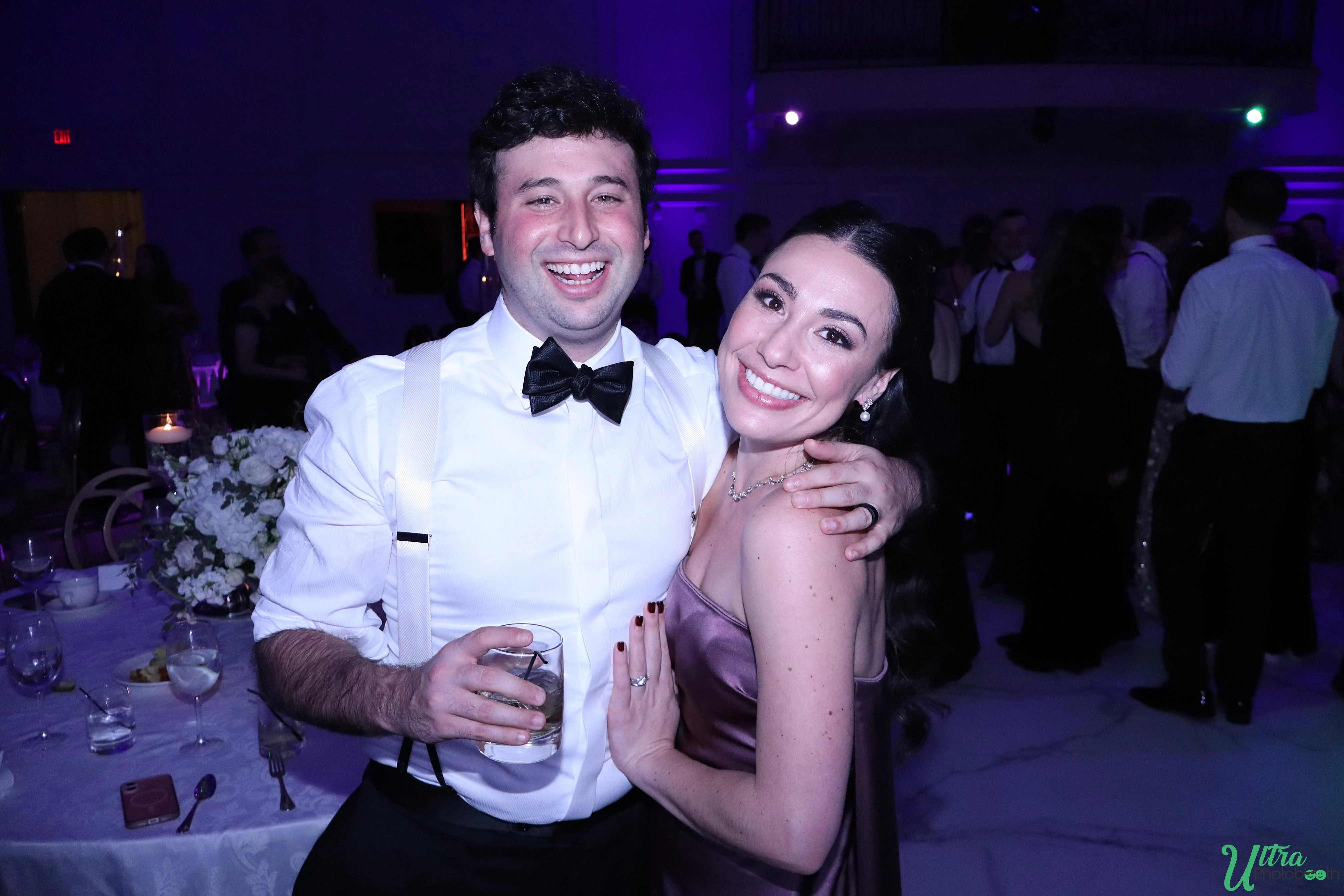
The first time we ran a roaming photobooth NYC wedding from cocktail hour all the way to last call, the bride told us afterward she had no idea we were even there until the photos started arriving in her group chat. That's the point. A good roamer disappears into the room. We've been doing this across NJ, NYC, and Philadelphia for years now, and the questions we still get most often are the same: what does it actually look like in the room, who carries what, and how does it slot into a wedding timeline that already has six other things happening at once?
Here's an honest walk-through, the way we'd brief a planner before showtime.
What Does a Roaming Photobooth Actually Do?
The simplest answer: a trained host carries a handheld unit — DSLR camera, ring light, ergonomic grip, and an iPad that delivers photos to guests in about ten seconds. Instead of a stationary booth in a corner, the booth comes to the guest. We walk between tables during dinner, slip onto the dance floor between songs, work the bar line during cocktail hour. People who would never queue at a traditional booth get caught mid-laugh and end up with a photo on their phone before they've finished their drink.
It sounds small. In practice, it's the difference between collecting 80 photos from the formal posers and walking out with 350 candid frames of a room that actually came alive.
How Does a Roaming Photobooth Fit Into a Wedding Timeline?
This is the question we get from planners in Manhattan, Hoboken, and Princeton more than anything else. Here's the cadence we've settled into for a typical five-hour reception with around 200 guests:
- Cocktail hour (60 minutes). The host works the bar line and lounge groupings. Guests are standing, holding drinks, in the mood to be photographed. We collect 100 to 140 photos in this window alone.
- Seated dinner (45 to 60 minutes). We take a quiet 20-minute break while plates land, then table-hop through the room while toasts and dessert are happening. Couples and family groupings get clean, well-lit shots without leaving their seats.
- First dances and parents' dances (15 to 20 minutes). Camera down. The professional photographer owns this stretch — we don't crowd them.
- Open dance floor (90 minutes plus). This is where the roamer earns its keep. Guests are loose, the lighting is dramatic, and a host who can read the floor will catch the night's best photos in the first 30 minutes.
- Last call. One slow lap of the bar and the lounge. Always closes the night with a few of the keepers couples actually print.
That's roughly 80% of the volume, packed into about 60% of the runtime.
What Gear Does the Host Bring?
We try to keep the kit slim — anything that doesn't earn its weight stays in the case. A standard roaming setup looks like this:
- A mirrorless DSLR body with a fast prime lens, tuned for low light
- A daylight-balanced LED ring light (about 18 inches), dimmable on the fly
- A handheld grip rig that lets the host shoot one-handed when the room is tight
- An iPad running our delivery software with LTE backup for venues with shaky Wi-Fi
- A spare battery rotation — typically two camera batteries, two ring-light packs, one iPad battery
- A small belt-clip printer for instant 2x6 prints when the couple has chosen the print add-on
That's it. No backdrop, no platform, no tripod, no power cord trailing across the floor. The host is the booth.
Where We've Used It Most
Roaming works almost anywhere a traditional setup struggles. The events that book it most often:
- Weddings at venues with limited cocktail-hour real estate — boutique hotels in Brooklyn, riverside spaces in Jersey City, ballroom-only buildings in Cherry Hill where there's nowhere to park a 10x10 footprint.
- Corporate events and brand activations where the client wants photos to feel earned rather than posed.
- Bar and bat mitzvahs during the kid-table chaos when no 13-year-old is going to walk to a corner booth voluntarily.
- Sweet sixteens and quinceañeras, where the energy is on the dance floor and the booth needs to follow it.
- Proms and school galas in Edison, Piscataway, and the Philadelphia suburbs where the room layout changes constantly.
We've also used it as a second unit alongside a stationary booth at larger events — one host roaming, one booth holding the corner. That combo works especially well at 300-plus guest weddings.
Two Insider Tips We Wish More Couples Knew
A couple of things we've learned the slow way and now bake into every event sheet:
Brief the host on family dynamics. A good roaming host is also a careful reader of rooms. If there are family members who shouldn't be photographed together, or a divorced parent who'd rather be in separate frames, tell the host before the cocktail hour. We've fixed this on the fly more times than we'd like.
Decide on prints early. A handheld printer is a small add-on, but the night runs differently with one. Without prints, the host can move twice as fast and double the photo volume. With prints, you walk away with a tangible keepsake guests stick on their fridges. There's no wrong answer — but the choice changes the whole rhythm.
Roaming Photobooth Rental NJ vs. Putting a Booth in the Corner
The corner booth has its place — it's still our default for guest-book moments and printed-strip events. But for high-energy receptions, brand activations with foot traffic, or any room where the floor plan is already crowded, a roaming photobooth rental NJ couples and corporate clients are increasingly choosing for one reason: it doesn't ask the room to come to it.
If the venue is small, the guest list is large, or the night is built around dancing and not posing, the roamer wins.
Booking for the Spring and Summer 2026 Season
May through October is wedding season across the Northeast, and our roaming hosts get booked out fastest for Saturday weddings 60 to 90 days ahead. If you've got a 2026 wedding, mitzvah, or corporate event on the calendar — anywhere from Manhattan down through Philadelphia — request a quote and we'll walk you through what fits. The earlier the conversation, the better the host pairing.
Planning an event?
Explore the services this article covers: